2026: The Creation and Development of Fake IDs (Risk, Reality, and Prevention)
In 2026, identity documents across the United States continue to evolve with stronger security features and more frequent verification practices. At the same time, counterfeit-document networks and online scam operations keep adapting. The result is a growing gap between how people think fake IDs “work” and what happens in real-world checks—especially when scanning, UV inspection, and data validation are involved. This article is written for education and prevention: to explain why fake IDs are dangerous, how verification is tightening, and how to make safer choices.
Why using fake IDs is risky in 2026
A common misconception is that counterfeit IDs are “just for getting into a place.” In reality, using or possessing fake identification can trigger serious consequences: criminal charges, school discipline, loss of housing or scholarships, employment issues, immigration or travel complications, and long-term reputational damage. Even when someone believes they are “being careful,” the risk is not just about being caught at a door—it’s about what happens next if staff involve law enforcement or if evidence links back to the user.
Another overlooked issue is that many “fake ID sellers” online are not reliable vendors at all. They can be scam operations collecting money, personal photos, and sensitive details. That information can later be used for harassment, extortion, identity theft, or additional fraud. In 2026, digital footprints, device identifiers, payment traces, and message logs can significantly increase exposure.
Clubs and bars: why checks are getting stricter
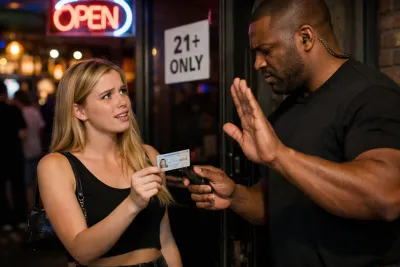
Nightlife venues face increasing liability and enforcement pressure. Many establishments train staff to look for inconsistencies across: the physical feel of the card, print quality, layout alignment, and security elements that are difficult to imitate convincingly. More importantly, venues are relying on verification routines rather than “eyeballing” an ID.
If staff suspect an ID is counterfeit, they may refuse entry, confiscate it (depending on local policy), or contact security and law enforcement. Even without arrest, the incident can be recorded by venue security systems and shared internally. In short: the environment is less forgiving than people assume.
Limits and consequences: what people underestimate
Many people assume the worst outcome is “they take it and you go home.” That’s not always true. If the situation escalates—especially when someone argues, tries to flee, or provides additional false information—the consequences can become significantly more severe.
In schools and colleges, possession or use of a counterfeit ID can violate student conduct policies. Outcomes may include probation, suspension, expulsion, and loss of campus housing. Even when criminal charges don’t occur, administrative penalties can still be life-changing.
Dating and social situations: safety and trust issues
Fake IDs don’t only create legal problems—they can create safety problems. Misrepresenting age or identity in social contexts can undermine trust and lead to dangerous situations. People may make decisions based on false information, which can create ethical and legal exposure for multiple parties.
If a fake ID is used to enter age-restricted environments or to misrepresent identity in intimate contexts, the fallout can include social harm, reporting, and long-lasting reputational consequences. Choosing honesty and safer alternatives protects both you and others.
Vehicle rental and travel: high-risk verification points
Car rental, hotels, airports, and other travel-related contexts tend to be higher scrutiny environments. Staff may compare the ID with reservation data, payment information, and other identity signals. In these settings, inconsistencies can trigger denial of service, security escalation, or law enforcement involvement.
Even if a counterfeit ID “looks similar” at a glance, verification may involve multiple layers: document validation practices, internal fraud alerts, and cross-checking of information. These contexts are not comparable to informal checks at a door.
Age checks and online offers: scams, tracking, and legal exposure
In 2026, many verification workflows include scanning, electronic age-gating, and record-keeping. When an ID is scanned, the data can be logged by a system (depending on the venue and jurisdiction). If an ID appears invalid or suspicious, that event can be recorded and used as part of a pattern of fraud detection.
Online “buy fake IDs” offers are also a major risk because they often involve providing a face photo and personal details. That creates a long-term vulnerability: the seller (or scammer) can reuse the data, threaten to expose it, or sell it onward. The safest move is to avoid sharing identity information with any illegal or unverified channel.
There is no “no restriction” fake ID—only escalating risk
Some people believe that if a counterfeit ID passes one check, it will pass everywhere. That’s not how real-world verification works. Different places use different inspection habits and different levels of scrutiny. A document that slips through once can fail the next time, and the consequences can escalate quickly.
The practical takeaway is simple: attempting to use counterfeit identification is not a “shortcut.” It’s a high-risk decision that can create legal exposure, financial loss, and lasting harm. If the goal is access to age-restricted activities, the safest path is to wait, use legal alternatives, or choose venues and activities that match your legal age.
Conclusion
As ID design and verification practices evolve in 2026, the risks of counterfeit identification increase—not only because security features improve, but because scanning, logging, and fraud detection become more common. If you’re considering using a fake ID, the most protective choice is to step back and avoid it. Focus on safer, legal options that won’t jeopardize your future.