Why Bars Reject Your Passport: ID Rules at Nightlife Venues
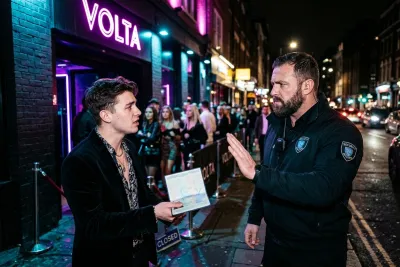
Few nightlife experiences are more bewildering than presenting an authentic, government-issued passport at an entrance door only to be turned away. A passport represents the gold standard of global identification, authorized by sovereign nations to verify citizenship and cross international borders. Yet patrons across major entertainment districts regularly find their passport rejected at bar checkpoints and nightclub velvet ropes. This disconnect often sparks arguments between patrons and security staff, with customers insisting that private venues are legally required to honor federal credentials. In reality, private property rights, the technical limits of hospitality age verification scanners, and the strict risks of liquor license enforcement give establishments wide latitude to decline passports.
Private Property Rights and House Identification Policies
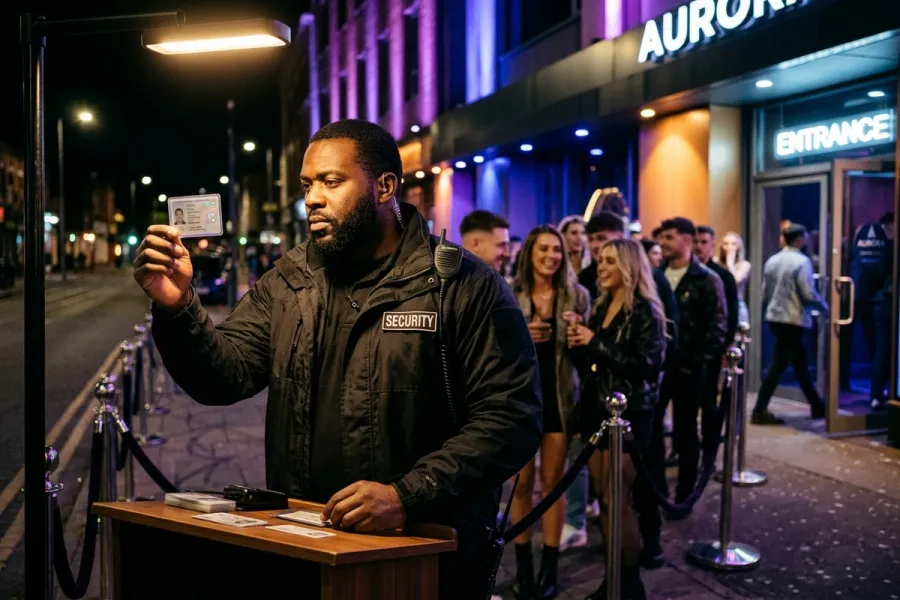
The reason a bouncer can legally decline a passport comes down to private property law. Bars and clubs are privately owned businesses, not public facilities. Under common law, commercial operators retain discretion to set admission rules, provided they do not unlawfully discriminate against protected classes under civil rights statutes.
Restricting entry credentials to domestic driver's licenses does not constitute unlawful discrimination if enforced uniformly. State Alcohol Beverage Control (ABC) agencies require verifying that consumers are at least twenty-one, but they do not mandate accepting every government document. To safeguard liquor licenses against heavy fines or suspensions, venues often adopt strict policies forbidding door staff from accepting passports. As explored in our age verification compliance guide for businesses, establishments regularly impose admission standards exceeding statutory minimums.
Technical Limitations of Hospitality Barcode Scanners
Modern nightlife establishments rely heavily on handheld optical verification terminals to streamline crowd intake and maintain compliance records. However, the technical architecture of these devices creates an operational hurdle for passport holders.
Most commercial scanners used by security door staff are built specifically to decode two-dimensional PDF417 barcodes. Standardized across North America by the American Association of Motor Vehicle Administrators (AAMVA), these barcodes package demographic data into uniform strings that mobile optical readers parse within seconds. Passports, by contrast, do not feature AAMVA PDF417 barcodes. Instead, physical passport booklets adhere to international standards established by the International Civil Aviation Organization (ICAO Doc 9303), storing data in optical Machine Readable Zones (MRZ) and contactless RFID microchips.
Reading an ICAO passport requires specialized flatbed scanners with multi-spectral illumination. Handheld terminals used at bar doors cannot read passport RFID chips or parse MRZ lines reliably in low light. When door staff scan an ID, they rely on software to log entry and flag irregularities, as detailed in our analysis of how bars and clubs spot fake IDs. Because standard handheld tools cannot process passport formats, venues enforce blanket exclusions to prevent door bottlenecks.
Security Staff Training and Foreign Credential Vulnerabilities
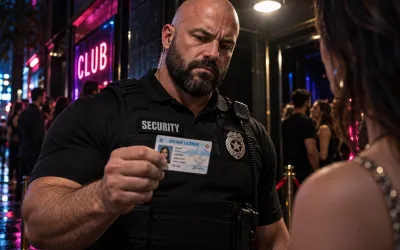
Beyond hardware limitations, door staff expertise plays a decisive role in why passports face routine rejection. Bouncers and security personnel in the United States undergo targeted training on regional driver's licenses. They understand the tactile feel of polycarbonate cards, the placement of state-specific microprinting, and the reaction of domestic security inks under blacklights.
By contrast, more than 190 nations issue passports with unique paper stocks, bindings, and laminates. Expecting door staff to distinguish authentic foreign booklets from sophisticated replicas in crowded, dim entryways is unrealistic. Because mistakenly admitting an underage patron carries strict liability penalties under state liquor laws, security staff exercise risk aversion by denying entry outright.
The Practical Alternative: State Non-Driver ID Cards
Carrying a passport on a night out poses serious risks. Passports are bulky, susceptible to liquid damage, and targets for theft. Replacing a lost passport involves substantial federal fees and weeks of processing. For international students or travelers, a lost passport requires consular appointments and risks immigration complications.
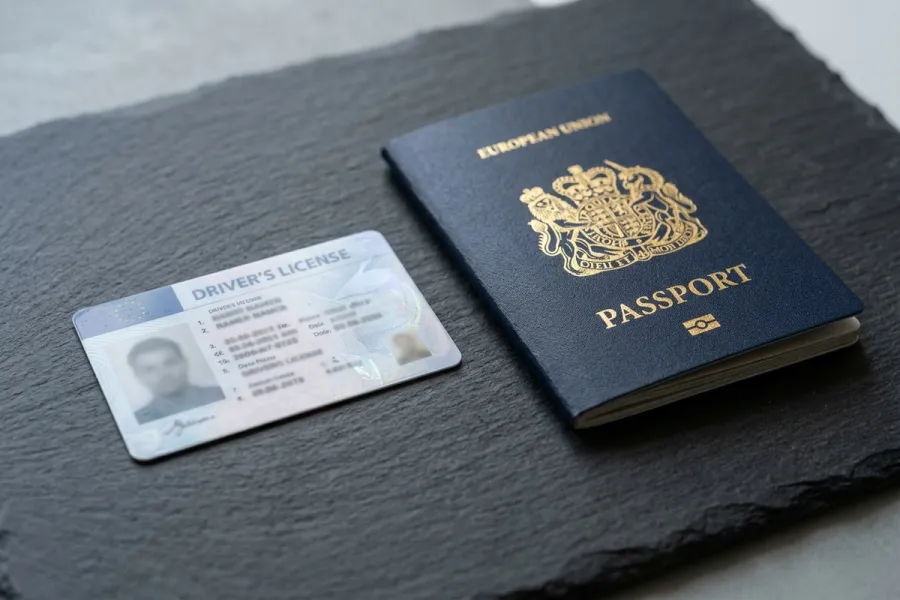
The most effective strategy for non-drivers, international residents, and travelers is obtaining an official state non-driver identification card. Issued by state motor vehicle agencies (such as the DMV or BMV), these cards provide key advantages:
- Universal Scanner Compatibility: State non-driver IDs use the exact same AAMVA PDF417 barcode format as driver's licenses, allowing any hospitality scanner to read them instantly.
- Identical Statutory Weight: State ID cards hold the same legal authority for alcohol age verification as a standard driver's license.
- Minimal Replacement Exposure: If a state ID card is lost or damaged during a night out, ordering a replacement online typically costs between $10 and $35, leaving your essential federal passport secure at home.
| Evaluation Dimension | Domestic Driver's License | Official Passport Booklet | State Non-Driver ID Card |
|---|---|---|---|
| Door Scanner Compatibility | 100% (standard AAMVA PDF417 format) | Low (requires specialized ICAO optical hardware) | 100% (standard AAMVA PDF417 format) |
| Nightlife Venue Acceptance | Universal across all domestic venues | Variable; frequently restricted by house policy | Universal across all domestic venues |
| Replacement Cost & Time | $15–$45; easily reordered online | $130–$165+; requires weeks and vital records | $10–$35; easily reordered online |
| Consequence of Loss or Theft | Temporary inconvenience; quick duplicate | High risk; stranded abroad, visa issues, travel halts | Low risk; passport remains secure at home |
| Form Factor & Durability | Durable plastic card; wallet friendly | Paper booklet; easily creased or water damaged | Durable plastic card; wallet friendly |
Frequently Asked Questions
Why do bars refuse to accept passports for age verification?
Bars frequently refuse passports because their handheld electronic scanners cannot parse international passport machine-readable zones or RFID chips, security staff are unfamiliar with foreign anti-counterfeiting features, and venue insurance policies often mandate domestic driver's licenses to mitigate liquor license liability.
Can a bar legally turn you away if your passport is genuine?
Yes. Private hospitality venues have the legal right to establish admission standards and specify which types of identification credentials they accept, provided they do not unlawfully discriminate against protected classes under civil rights laws. A uniform policy requiring domestic driver's licenses is fully lawful.
What identification should international visitors and non-drivers carry?
International visitors and non-drivers residing in the United States should obtain an official state non-driver identification card from the local motor vehicle registry. Temporary tourists who must carry a passport should consider patronizing higher-end hotel lounges or calling venues in advance to confirm passport acceptance.
How do you obtain an official state non-driver identification card?
To obtain a state non-driver ID, visit a local Department of Motor Vehicles office with proof of identity (such as a foreign passport and visa or domestic birth certificate), proof of Social Security status or eligibility, and two documents establishing state residential address, such as utility bills or lease agreements.
Being turned away with an authentic passport is frustrating, but understanding nightlife operational constraints clarifies why these rules exist. Barcode scanner limits, liquor liability, and the risk of losing primary citizenship documents make carrying a passport impractical. Obtaining a state non-driver ID ensures seamless scanner compatibility while keeping your passport secure.