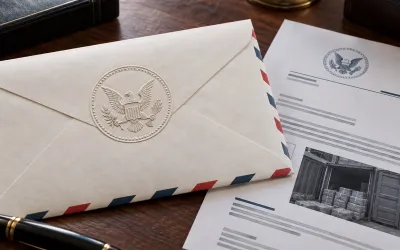
Casino Age Verification: How Gaming Floors Check Identification
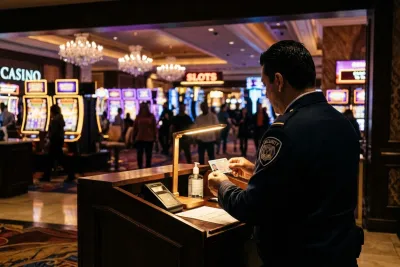
Stepping onto a licensed casino floor introduces visitors to one of the most rigorous security checkpoints in commercial hospitality. While neighborhood taverns rely on momentary visual inspections at the door, commercial gaming establishments operate under intensive regulatory scrutiny that treats age compliance as an existential legal priority. Whether approaching an entrance security podium, ordering refreshments, or claiming payouts at the cashier cage, patrons encounter a comprehensive casino age verification ID check designed to detect fraudulent documentation, enforce statutory age boundaries, and maintain compliance with gaming oversight agencies. Understanding how gaming floor checkpoints evaluate credentials—and why their operational standards diverge so sharply from conventional nightlife—demands examining regulatory mandates, forensic document technology, and the strict consequences associated with fraudulent credentials.
Regulatory Stakes: Gaming Control Boards and Strict Liability
The intensity of identity verification within a commercial casino stems directly from regulatory liability. In traditional nightlife, state Alcohol Beverage Control (ABC) departments enforce liquor statutes through progressive disciplinary schedules. If a municipal tavern admits an underage patron, regulators typically assess an administrative penalty between $500 and $2,500, rarely threatening core business continuity. Commercial gaming facilities, by contrast, operate under state gaming commissions—such as the Nevada Gaming Control Board or the New Jersey Division of Gaming Enforcement—that enforce zero-tolerance statutory frameworks.
Under state gaming statutes, allowing an individual under twenty-one years of age to access the active gaming floor constitutes a major violation, regardless of whether that individual wagers or consumes alcohol. Regulatory commissions routinely fine casino properties $50,000 to $250,000 for individual underage infractions. Repeat occurrences can trigger license revocation hearings, jeopardizing gaming concessions representing hundreds of millions of dollars. Corporate compliance protocols require security officers to challenge anyone appearing under thirty-five and conduct a thorough casino age verification ID check before granting entry, as explored in our age verification compliance guide for businesses.
Verification Technology: Multi-Spectral Optical and Biometric Scanners
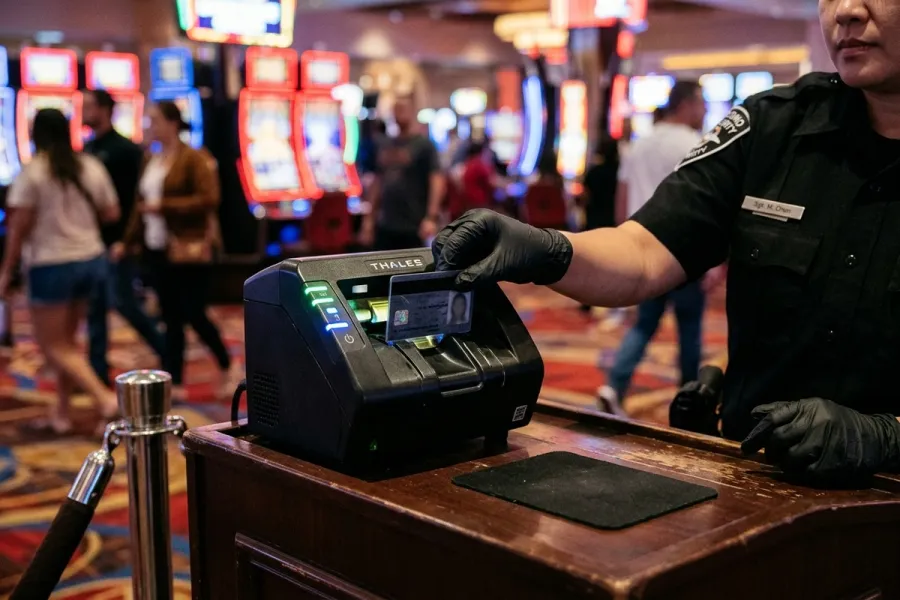
Unlike standard entertainment venues that deploy consumer mobile apps to read barcode text, gaming enterprises invest in commercial forensic desktop document readers. Specialist systems conduct multi-spectral optical examinations within two to four seconds. When an identification card is inserted into a casino document scanner, the device executes several autonomous evaluations:
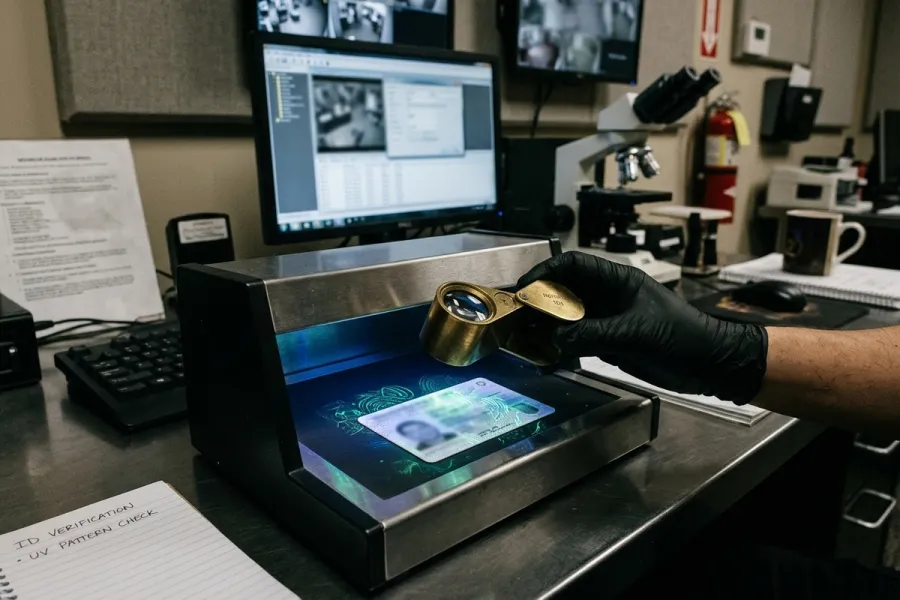
- Multi-Spectral Optical Imaging: The scanner illuminates credentials under white, infrared (NIR), and ultraviolet (UV) light, verifying state-specific fluorescent inks, microprinting, and reactive holographic overlays.
- Substrate Analysis: Modern state driver's licenses use multi-layered polycarbonate or composite synthetics. Counterfeit cards printed on standard PVC laminates fail substrate reflection measurements immediately.
- Algorithmic Barcode Verification: The scanner decodes the AAMVA-compliant PDF417 barcode on the card reverse, validating cryptographic checksums and field syntax against authentic state templates.
- Biometric Facial Comparison: Fixed overhead surveillance cameras at security stations capture facial images, cross-referencing patrons against state voluntary self-exclusion registries and barred-patron rosters.
These advanced forensic measures, detailed in our review of ID fraud detection technology for businesses, ensure that superficial replicas are detected immediately at checkpoint stanchions.
Secondary Inspection Triggers and Security Detention Protocols
While primary entrance scanners validate legitimate visitors within seconds, specific irregularities trigger secondary inspection. Circumstances prompting supervisors to pull a card aside include physical creases, peeling protective film, chipped corners, or warped plastic substrates that interfere with the document reader's focal plane. Out-of-state credentials, newly redesigned state templates, and a lack of laser-engraved raised tactile lettering on the cardholder's name or birthdate also prompt escalation.
Presenting altered or fictitious identification at a gaming property carries severe ramifications. Under state gaming statutes, casino security officers possess statutory merchant detention powers. If security suspects that a patron has presented a fraudulent document during a casino age verification ID check, guards can legally detain the individual in a private interview room while notifying on-site law enforcement. Because major gaming properties maintain permanent on-site substations with municipal police or state gaming agents, criminal processing begins immediately.
The presenter faces criminal charges, including unlawful entry onto a gaming floor, possession of a forged instrument, and immediate forfeiture of all chips or slot winnings. Beyond prosecution, the property issues an irrevocable trespass warning and enters demographic data into national corporate databases, resulting in multi-property entry bans across affiliated venues, as documented in our guide to whether security can legally confiscate an ID.
System Comparison: Hospitality Bars vs. Commercial Casino Security
The regulatory and technical contrast between hospitality nightlife venues and regulated gaming establishments is outlined below.
| Operational Dimension | Hospitality Bar / Club | Commercial Gaming Casino |
|---|---|---|
| Regulatory Oversight | State ABC / Municipal Liquor Board | State Gaming Control Board / Tribal Commission |
| Financial Liability per Violation | $500 to $2,500 fine; brief suspension | $50,000 to $250,000 penalty; mandatory review |
| Primary Hardware Architecture | Handheld barcode readers or phone apps | Dual-sided optical desktop forensic readers |
| Verification Layers Tested | PDF417 barcode format, basic checksums | UV ink, infrared luminescence, substrate, biometrics |
| Law Enforcement Integration | Periodic patrols or 911 dispatch | Permanent on-site police and dedicated state agents |
| Enforcement Action on Detection | Document confiscation or verbal refusal | Merchant detention, police handover, lifetime ban |
Frequently Asked Questions
Can casino security legally detain a patron suspected of presenting a fraudulent ID?
Yes. Under statutory merchant detention provisions in major gaming jurisdictions, licensed casino security personnel have legal authority to detain individuals suspected of presenting fraudulent documents or gaining unlawful access to a gaming floor. Security may hold the individual in a designated interview room using reasonable restraint until state gaming control agents or municipal officers arrive to execute formal arrest procedures.
What personal information do casino ID scanners extract and record?
When a document scanner reads a driver's license or state identity card, the hardware extracts demographic data encoded within the machine-readable zone and PDF417 barcode. This information includes legal name, birthdate, address, document identification number, expiration date, issuing jurisdiction, and physical descriptive traits. Casino management systems log this data alongside entry timestamps and surveillance snapshots for regulatory audit compliance.
Do commercial casinos share barred patron databases with other properties?
Yes. Commercial casino operators routinely maintain interconnected security networks that log banned individuals, self-excluded patrons, and persons cited for fraudulent document usage. Large gaming conglomerates share centralized exclusion registers across affiliated corporate properties worldwide. Additionally, regional surveillance coalitions share incident bulletins to prevent repeat fraud attempts across competitive venues.
What should visitors do if a legitimate government-issued ID fails a casino scanner check?
If an authentic, valid government credential triggers a scanner read error during entry screening, remain calm and cooperative. Request a secondary inspection with a security shift supervisor. Present supplementary documents to verify your identity, such as a credit card with matching embossed lettering, a passport, a government employee badge, or a digital banking portal matching your name. Supervisors can also verify document parameters manually to resolve legitimate scanning discrepancies.
Navigating commercial casino checkpoints requires recognizing that gaming establishments operate under intense statutory obligations where identity compliance cannot be compromised. By deploying forensic multi-spectral scanners, trained document examiners, and strict supervisory protocols, gaming floors maintain safe and lawful gaming environments. Visitors carrying authentic, unexpired identification credentials can expect prompt, professional entry processing while enjoying premier entertainment destinations.