Fake ID vs. Real State ID & Driver's License: Spotting Counterfeit Credentials, Security Features, and Legal Realities
Government-issued identification is a fundamental requirement for participating in modern commercial, financial, and civic activities across the United States. State departments of motor vehicles (DMVs) issue two primary forms of authentic identification credentials: the official state identification card (non-driver ID) and the standard driver's license. In an era marked by sophisticated illicit markets offering modern "novelty IDs" and so-called "scannable fake IDs," distinguishing legitimate credentials from fraudulent representations has become critical for compliance officers, bouncers, financial institutions, and everyday citizens. Understanding the structural differences between these documents—as well as the high-stakes legal consequences of altered or counterfeit cards—ensures compliance and safeguards personal identity.
Legal Definitions, Authenticity, and Issuing Authorities
Both state ID cards and driver's licenses are official credentials issued exclusively by state motor vehicle agencies—such as the California DMV, Florida Highway Safety and Motor Vehicles (FLHSMV), or the Pennsylvania Department of Transportation (PennDOT). Legitimate documents are manufactured using regulated, secure substrates, precision holographic overlays, and 2D barcode standards mandated by the American Association of Motor Vehicle Administrators (AAMVA). Any card originating outside this state-sanctioned supply chain is classified legally as an unauthorized replica, counterfeit document, or fraudulent identification.
The core legal difference between legitimate credentials lies strictly in operating privileges:
- Driver's License: Grants dual legal authority: it serves as official government photo identification and certifies that the holder has demonstrated competence to operate motor vehicles on public roadways under state vehicle codes.
- State Identification Card (Non-Driver ID): Serves exclusively as an official identity, proof-of-age, and residency credential. It conveys zero legal driving authorization under any circumstances.
Under state laws, an individual cannot legally hold an active driver's license and an active state ID card from the same state simultaneously. Furthermore, carrying duplicate credentials under conflicting names or altered birth dates immediately flags potential identity fraud.
Comparison: Genuine State ID Card vs. Driver's License
The table below summarizes the operational differences, verification parameters, and regulatory requirements between genuine state ID cards and standard driver's licenses.
| Comparison Dimension | State Identification Card (Non-Driver ID) | Driver's License |
|---|---|---|
| Motor Vehicle Driving Privileges | None; strictly invalid for operating motor vehicles | Full legal driving privileges for designated vehicle class (e.g., Class C / Class D) |
| Testing Requirements | No written knowledge test, vision screening, or driving road exam required | Requires passing a written rules exam, vision test, and practical road skills test |
| Age Eligibility | Available at any age in most states (including minors and infants) | Minimum age required (typically 16 to 18 years old depending on state) |
| REAL ID Federal Compliance | Can be issued as REAL ID compliant (marked with gold/black star) | Can be issued as REAL ID compliant (marked with gold/black star) |
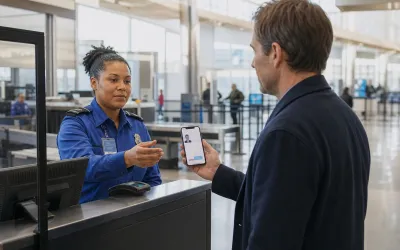
| Domestic Air Travel (TSA) | Fully accepted at TSA checkpoints if REAL ID compliant or accompanied by passport | Fully accepted at TSA checkpoints if REAL ID compliant or accompanied by passport |
| Banking & Financial Verification | Universally accepted as primary government photo identification | Universally accepted as primary government photo identification |
| Form I-9 Employment Verification | Accepted as Form I-9 List B identity document (must be paired with List C work authorization) | Accepted as Form I-9 List B identity document (must be paired with List C work authorization) |
| Susceptibility to Counterfeiting | Targeted for under-21 age verification bypassing (drinking age, entry) | Heavily targeted by counterfeiters for both age falsification and full identity theft |
| Typical State Issuance Fee | $10 to $35 (frequently reduced or free for seniors and disabled individuals) | $25 to $65 depending on state validity period and class |
For a state-by-state look at how design formats and security features differ across major jurisdictions, see our California, Texas, and New York driver's license comparison.
The Anatomy of a Fake ID: Types, Terminology, and Structural Flaws
In identity verification terminology, fraudulent credentials fall into several distinct categories based on how they were fabricated and deployed:
- Counterfeit Cards / Novelty IDs: Complete replicas manufactured by unauthorized offshore entities or illicit print shops attempting to emulate state designs. While often marketed online as "100% scannable fake IDs," they frequently fail microscopic, tactile, and optical inspections.
- Altered Credentials ("Chalked" or Modified IDs): Authentic government documents where critical text fields—such as the date of birth (DOB) or expiration year—have been physically shaved, restamped, laminated over, or digitally manipulated.
- Impersonation / Borrowed IDs ("Pass-Downs"): Genuine, unaltered driver's licenses or state IDs used by look-alike siblings or acquaintances. While the card itself passes physical and barcode audits, it fails biometric face-matching and verbal challenge questions.
- Stolen / Synthetic Identities: Real identity profiles compromised through data breaches, used to manufacture physical fraudulent cards for financial fraud, check cashing, or illegal vehicle leases.
Forensic Verification: Spotting a Fake ID vs. An Authentic Credential
Modern state motor vehicle agencies implement multi-tiered defense systems. Understanding these mechanisms allows bouncers, bartenders, cashiers, and security officers to spot bogus IDs during physical inspection:
- Substrate Composition and Tactile Feedback: Authentic state credentials are increasingly manufactured on rigid, high-durability polycarbonate materials rather than generic laminated PVC plastic. Our polycarbonate vs. PVC driver's license card materials guide covers the full technical differences. Genuine cards produce a distinct metallic "ring" when dropped on a hard surface, whereas counterfeit fake IDs often feel flimsy, peel apart at the edges (delamination), or bend without proper resistance (the traditional "bend test").
- Laser Engraving vs. Flat Thermal Printing: Real IDs use precision laser engraving where demographic text, primary photos, and miniature ghost images are burnt directly into inner core layers. This creates noticeable raised tactile lettering on the surface. Counterfeit IDs produced on cheap card printers feature flat, smooth ink ribbons that smudge or wear off over time.
- Microprinting and Intaglio Features: Genuine driver's licenses incorporate tiny microtext along borders and background artwork that is legible only under a magnifying loupe. Low-grade forged IDs blur these lines into broken, solid, or pixelated lines.
- Ultraviolet (UV) Patterns and Black Light Checks: When placed under a 365nm black light, authentic credentials reveal crisp, state-specific UV artwork, glowing state seals, or secondary UV ghost portraits. Cheap replica fake IDs frequently use improper phosphorescent inks that glow dull white or feature misaligned designs.
- Optically Variable Devices (OVD) and Holographic Overlays: Authentic state seals, state mottos, and custom holographic foils shift colors dynamically when tilted against the light. Fake ID suppliers often rely on generic, commercial "hologram stickers" (such as generic "GENUINE" or globe patterns) that lack state-specific insignia.
- 2D Barcode (PDF417) Decoders & Backend Parsing: The dense 2D barcode on the back must strictly adhere to AAMVA specifications. Although illegal vendors advertise "scannable IDs," simple scanner apps merely read raw text strings. Professional verification systems cross-check the parsed barcode payload against front-face data, verify state-specific checksum algorithms, and detect syntax discrepancies in capitalization, delimiter spacing, and date formatting.
Legal Consequences and Penalties for Possessing or Using a Fake ID
Underestimating the legal gravity of carrying a fake ID is a common mistake. Possessing, manufacturing, purchasing, or presenting fraudulent identification carries extensive statutory ramifications under municipal, state, and federal criminal codes:
- Misdemeanor vs. Felony Charges: Presenting an altered credential or a fake driver's license to gain access to a bar or purchase alcohol is typically charged as a misdemeanor (e.g., possession of fraudulent identification or minor in possession). However, manufacturing fake IDs, possessing forged government seals, or presenting false documents to police officers, employers, or banking institutions quickly escalates to felony forgery, falsification of public records, or criminal identity theft.
- Automatic Driver's License Suspension: In numerous jurisdictions, getting caught with a counterfeit or altered identification results in an administrative suspension of the offender's actual driving privileges for 6 to 12 months, regardless of whether a vehicle was involved in the citation.
- Long-Term Record Ramifications: A fraudulent ID conviction results in a permanent criminal record, which can trigger disciplinary expulsion from universities, forfeiture of scholarships, denial of professional licensure (legal, medical, accountancy, or nursing boards), and disqualification from government security clearances.
- Federal Prosecution: Presenting a counterfeit, stolen, or altered ID at a Transportation Security Administration (TSA) airport security checkpoint, military base, or federal courthouse is a direct federal offense prosecuted under 18 U.S. Code § 1028 (Fraud and related activity in connection with identification documents).
Who Obtains a Real State ID Card and When It Is Required
Non-driver state identification cards provide legally recognized proof of identity for millions of citizens who do not drive, eliminating any temptation to carry unauthorized or dubious identification documents. Common applicant categories include:
- Urban Commuters & Non-Drivers: Individuals who utilize public transit, trains, or walking corridors and do not require vehicle operating rights.
- Retiring Drivers and Senior Citizens: Older adults who voluntarily surrender their driver's licenses due to age, vision limitations, or physical changes, transitioning to a senior non-driver ID card.
- Young Adults and Minors: High school and college students needing authoritative government-issued photo ID for standardized college admissions testing (SAT, ACT), financial aid processing, or opening verified bank accounts.
- Citizens with Medical Conditions: Individuals diagnosed with neurological conditions (such as uncontrolled epilepsy) or mobility impairments that legally prohibit road operation.
- Individuals with Suspended Driver's Licenses: Motorists whose driving privileges are temporarily revoked who still require an active, legitimate identity card to apply for housing, sign leases, cash checks, and obtain employment.
REAL ID Compliance and Application Procedures
Both genuine state ID cards and driver's licenses can be issued as REAL ID-compliant documents. A legitimate REAL ID features a distinctive gold, black, or cutout star in the upper corner, ensuring authorized access to domestic commercial aviation and secured federal buildings. The TSA's REAL ID page lists all accepted compliant documents for airport checkpoints.
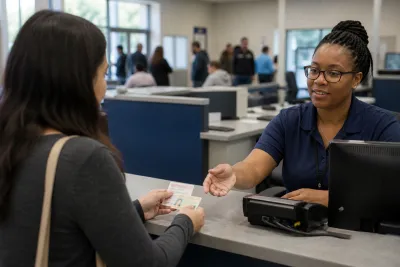
To obtain an authentic state ID card and avoid the risks associated with fraudulent identity products, applicants must provide verifiable source documentation directly at a DMV branch (for renewal timelines and fees by state, see our state-by-state driver's license renewal guide):
- Proof of Identity and Legal Status: Original certified U.S. birth certificate, valid U.S. passport, or unexpired Permanent Resident Card (Form I-551).
- Proof of Social Security Number: Original Social Security card, W-2 tax document, or SSA-1099 form displaying the full legal name and nine-digit SSN.
- Proof of State Domicile: Two independent residency records bearing the applicant's physical street address, such as signed lease agreements, utility statements, or banking documentation.
Frequently Asked Questions
What is the difference between a "novelty ID" and a "fake ID"?
"Novelty ID" is an informal marketing euphemism used by illicit card producers to circumvent online selling regulations. In legal practice, if a novelty card mimics the design, layout, or state seals of an official driver's license or state ID card, courts treat it as an illegal counterfeit identification credential.
Can electronic ID scanners detect every scannable fake ID?
No basic handheld barcode scanner can catch every fake, but modern verification systems do not just "read" data. Advanced optical ID scanners capture high-resolution images under white, UV, and infrared light, verify card material density, and compare the PDF417 barcode structure against strict AAMVA formatting and checksum rules, exposing most so-called "scannable" counterfeits instantly.
What should an establishment do when an employee spots a fake ID?
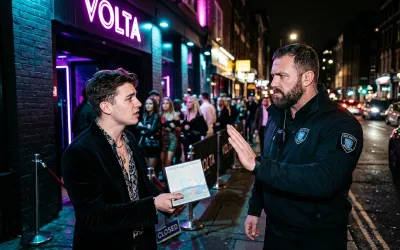
Protocols vary by state and municipal liquor laws. In many jurisdictions, venue personnel (such as door staff or bartenders) are legally authorized or required to confiscate suspected fraudulent IDs and hand them over to local law enforcement. In other regions, staff are instructed to simply refuse entry or sale and return the card to prevent physical confrontation.
Is using an older sibling's real ID considered a fake ID?
Yes. Under the law, utilizing another person's valid driver's license or state ID is categorized as "fraudulent use of another's identification" or "criminal impersonation." It carries legal consequences similar to carrying a manufactured fake ID, including criminal charges and license suspension for both the user and the person who lent the card.
Can a state ID card be used instead of a driver's license at a TSA checkpoint?
Yes. A genuine state-issued non-driver ID card holds the exact same federal verification status as a driver's license at TSA checkpoints, provided it is REAL ID compliant (marked with a star) or paired with an alternative approved document, such as a valid U.S. passport.
State identification cards and driver's licenses represent rigorous, legally authoritative identity standards. While illicit markets continue to produce counterfeit novelties and fake IDs, evolving physical biometrics, laser engraving, UV security, and digital database cross-checks make detection swift—carrying severe criminal and financial penalties for anyone attempting to falsify their identity.