How Fake ID Websites Operate — Risks, Red Flags, and How to Stay Safe
The online ecosystem surrounding fraudulent identification credentials is an unregulated, high-risk sector of the shadow economy. Dominated by offshore print operations, domestic intermediaries, and outright confidence scams, commercial counterfeit ID platforms market deceptive solutions to individuals seeking to circumvent statutory age restrictions or replace lost documentation. Behind glossy web storefronts and search engine marketing lies an environment characterized by financial theft, personal data harvesting, and severe statutory criminal exposure. Investigating this illicit industry reveals the operational hazards and statutory liabilities confronting consumers.
The Counterfeit ID Vendor Landscape: Four Distinct Operational Tiers
Analyzing digital footprints, domain registrations, and community reports reveals four distinct operator profiles in the fraudulent credential marketplace:
- Offshore Manufacturing Facilities: Industrial printing syndicates operating overseas. While they own offset lithography presses and laser engravers, parcels face strict interdiction by federal border authorities at international postal hubs.
- Domestic Middlemen and Resellers: Marketers who create storefronts, purchase bulk orders from offshore labs at wholesale rates, and mark up retail prices by 100 to 200 percent while transmitting customer data across unencrypted channels.
- Outright Scam Storefronts: Ghost platforms engineered exclusively to steal funds without producing cards. They hijack known names, deploy clone domains (.xyz, .top), and vanish once payments clear.
- Legitimate Theatrical Novelty Providers: Lawful businesses producing novelty props for stage and film. They comply with federal law by applying permanent disclaimer markings, omitting state seals, and prohibiting unlawful use.
Financial Mechanics and Advance Cryptocurrency Payment Traps
The financial architecture of illicit document platforms is designed to eliminate buyer protection while guaranteeing non-refundable revenue for operators. Standard commercial transactions provide consumer safety through credit card chargeback mechanisms and merchant dispute arbitrations. In contrast, fraudulent identification platforms mandate irreversible payment rails such as Bitcoin, Ethereum, or Monero. Blockchain transfers are mathematically immutable; once the buyer confirms the transaction, the digital assets cannot be recovered, disputed, or frozen.
Analysis of community reports on forums like Reddit and Quora reveals a common secondary extortion cycle. After receiving initial payment, operators send alarming notices claiming the shipment was seized by shipping agents or border control, demanding an additional $150 to $400 for 'clearance stamps' or 'discreet delivery insurance.' Victims who pay never receive goods and face escalating extortion demands.
| Vendor Operating Category | Financial Scam Vulnerability | Frontline Detection & Seizure Risk | Legal Liability for Purchaser | Personal Data Exposure |
|---|---|---|---|---|
| Offshore Manufacturing Labs | Moderate; orders ship irregularly, but exit scams remain common | High; international mail interdiction by CBP and postal inspectors | Federal and state felony exposure under 18 U.S.C. § 1028 | Severe; personal photos and addresses stored on overseas servers |
| Domestic Resellers / Brokers | High; customer support delays, arbitrary markups, and unfulfilled orders | High; inferior batch printing often fails basic retail scanner checks | State misdemeanor and felony false document possession charges | Critical; personal data handled across unencrypted intermediary channels |
| Outright Scam Storefronts | 100% loss; complete advance-fee theft with zero product delivery | Not applicable; no physical product is ever manufactured or shipped | Financial loss; potential secondary blackmail and extortion threats | Catastrophic; full biographical profiles harvested for darknet identity theft |
| Lawful Theatrical Novelty Makers | Zero; transparent merchant processing, clear invoices, and refund terms | Zero when used lawfully; cards feature explicit 'PROP ONLY' disclaimers | Zero legal liability when retained as props and not presented as legal ID | Protected; compliant data retention policies under commercial privacy laws |
Quality and Detection Failures: Why Counterfeit Cards Get Caught
Counterfeit credentials routinely fail during modern physical and digital identity verifications:
- Optical Barcode and Syntax Verification: Genuine credentials adhere to data structure standards established by the American Association of Motor Vehicle Administrators (AAMVA). Commercial electronic scanners parse the 2D PDF417 barcode on the reverse side, verifying mathematical checksum algorithms, expiration date alignments, and birthdate formatting. Inauthentic barcodes frequently fail checksum logic, triggering instant device rejections.
- Substrate and Tactile Deficiencies: Many genuine state driver's licenses (such as New York, Texas, and California) are manufactured from solid multi-layer polycarbonate. Counterfeit cards printed on cheap PVC composite plastic lack the metallic acoustic resonance of dropped polycarbonate and omit true sub-surface laser-engraved tactile lettering.
- Ultraviolet (UV) Response Inconsistencies: Verification personnel inspect credentials under 365nm long-wave ultraviolet light. While genuine credentials exhibit sharp, multi-color fluorescent state emblems, counterfeit reproductions often display blurred, bleeding dyes or fail to react altogether.
Statutory Penalties, Federal Enforcement, and Legitimate Alternatives
Engaging with online counterfeit ID platforms creates severe criminal liabilities. Under federal law, 18 U.S.C. § 1028 criminalizes the production, transfer, and possession of false identification documents, establishing statutory prison sentences reaching up to 15 years for aggravated offenses. Furthermore, U.S. Customs and Border Protection (CBP) and Homeland Security Investigations (HSI) routinely seize overseas parcels at international mail facilities, recording recipient names and home delivery addresses for potential prosecution.
At the state level, possessing an altered or fraudulent driver's license carries severe misdemeanor or felony penalties, automatic mandatory driver's license suspensions for up to one year, and permanent criminal records that undermine university enrollment and professional licensing.
For individuals facing legitimate identity documentation challenges, lawful alternatives exist. If an authentic driver's license is lost, stolen, or damaged, state motor vehicle administrations provide fast, inexpensive replacement credentials online or in person. For non-drivers requiring official government photo identification, state DMVs issue REAL ID-compliant identification cards. For stage, film, or cosplay productions, compliant prop credentials bearing permanent disclaimers provide realistic visual utility without violating federal document statutes.
Frequently Asked Questions
How do you spot a fake ID scam website?
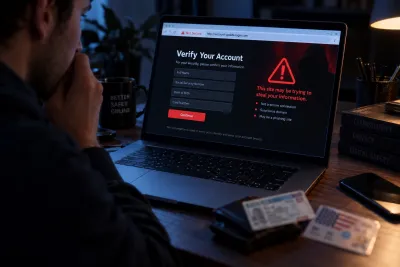
Key indicators include demanding non-refundable payment via cryptocurrency or prepaid gift cards, utilizing disposable domain extensions (.xyz, .top, .cc), offering zero verified corporate contact details, operating support exclusively via anonymous messaging apps like Telegram, and displaying generic, unverifiable customer testimonials.
What happens legally if you are caught with a fake ID?
Law enforcement officers or venue security personnel confiscate the card and initiate criminal proceedings. Penalties vary by state but typically include Class A or B misdemeanor charges, felony forgery citations, substantial monetary fines, community service, and mandatory driver's license suspension.
Can law enforcement trace online fake ID purchases?
Yes. Federal agencies investigate counterfeit document supply chains by intercepting international shipments, issuing subpoenas to hosting providers, and analyzing public blockchain ledgers for cryptocurrency transactions linked to known vendor wallets.
What data risks occur when submitting personal information to an ID website?
Submitting authentic biographical details, residential addresses, and high-resolution facial photographs exposes you to severe identity theft. Counterfeit operators routinely retain customer databases and sell personal records on darknet forums, facilitating synthetic identity fraud and unauthorized credit applications.
What legitimate alternatives exist for missing or replica IDs?
For everyday identification, motorists should request official duplicate cards directly through state motor vehicle administration portals. For artistic or entertainment purposes, production studios must utilize legally compliant novelty props that feature permanent statutory disclaimers and omit official state seals.
The operational landscape of counterfeit identification websites is fundamentally defined by deception, financial loss, and severe statutory liabilities. Recognizing prevalent scam mechanics, frontline detection standards, and enduring criminal consequences empowers consumers to avoid predatory online platforms and pursue legitimate government-issued credentials through lawful administrative channels.