Across social discussion boards, student networks, and consumer forums, no topic generates more strategic discussion than fake id state selection. Prospective buyers continuously debate whether ordering an in-state fake id offers a higher success rate than presenting an out-of-state fake id. Discussions across Reddit communities such as r/fakeid, r/college, and r/alcohol reveal a deeply divided user base. While some patrons believe local credentials blend into casual nightlife seamlessly, others insist that choosing a distant jurisdiction exploits staff knowledge gaps. Examining this debate illuminates the competing theories circulating among consumers and the operational realities of frontline venue verification.
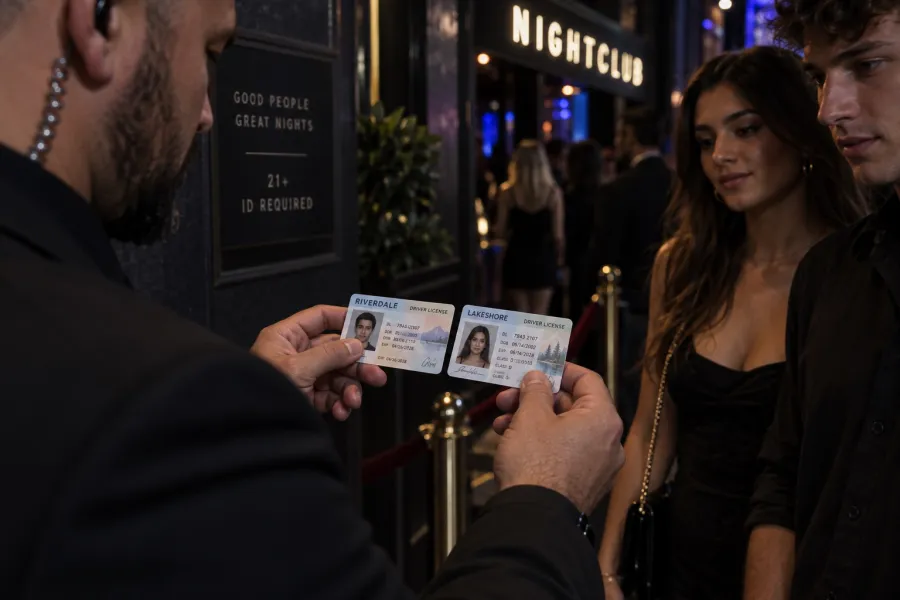
The Core Tactical Divide: In-State Fake ID vs. Out-of-State Fake ID
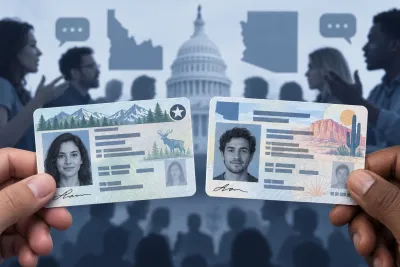
Online community discussions outline two distinct tactical perspectives:
- The In-State Argument (Natural Demographic Conformity): Proponents of an in-state fake id argue that presenting local documentation avoids immediate suspicion. At neighborhood taverns, sports bars, or regional dining venues, most patrons carry local licenses. Presenting an in-state card matches regional demographic expectations, avoiding the hesitation that often accompanies out-of-state cards. Furthermore, forum members note that possessing local identification aligns naturally with in-state vehicle registrations, regional accents, and local conversational references.
- The Out-of-State Argument (Exploiting Staff Knowledge Gaps): Conversely, advocates for an out-of-state fake id assert that local credentials face extreme scrutiny. Because bouncers and bartenders inspect hundreds of authentic local licenses every shift, their sensory familiarity with genuine card materials is exceptionally sharp. Supporters believe door staff are far less likely to recognize subtle flaws in unfamiliar layouts, complex state seals, or microprinting variations from distant states such as Ohio, Pennsylvania, or South Carolina.
Door Staff Realities: How Bouncers Evaluate Fake ID State Selection
Frontline security personnel in collegiate markets subject an out-of-state fake id to substantially higher scrutiny because bouncers recognize distant IDs as the primary choice of underage patrons.
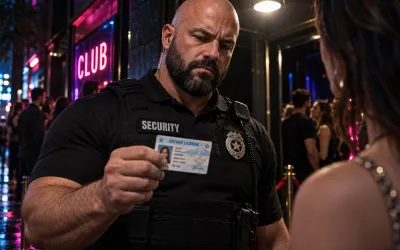
Contributions from current and former door security staff on hospitality forums present a very different perspective from consumer theories. In major college towns, security personnel report that an out-of-state credential frequently triggers an immediate manual review. Bouncers understand that underage college students actively source distant licenses to bypass age gates, making unfamiliar cards an immediate magnet for secondary inspection.
To standardize verification, hospitality venues deploy age verification technology used by bars alongside physical inspection protocols. The table below summarizes the key arguments, operational assumptions, and verification hurdles documented across community discussions for both state options.
| Selection Strategy | Primary Community Rationale | Operational Security Reality | Dominant Failure Point |
|---|---|---|---|
| In-State Fake ID | Blends into local demographic flow; matches regional accent and address knowledge | Door staff handle genuine local cards continuously; immediate tactile comparison | Microprint flaws, incorrect polycarbonate flex, or missing raised laser engraving |
| Distant Out-of-State Fake ID | Bouncers unfamiliar with distant security layouts; assumed lower scrutiny | Draws immediate suspicion in college towns; triggers secondary verification checks | Inability to recite state capital, zip code, or county seat during verbal quiz |
| Bordering State Selection | Plausible travel overlap; common among regional commuters and students | Staff maintain moderate familiarity; regularly cross-referenced in ID reference guides | Barcode checksum failure on scanners programmed with regional syntax |
| Low-Population State Selection | Extremely rare format; door staff unlikely to have seen genuine version | High novelty factor prompts manager review or outright refusal of service | Lack of matching regional student documents or secondary payment cards |
Secondary Verification and the Limits of State Selection
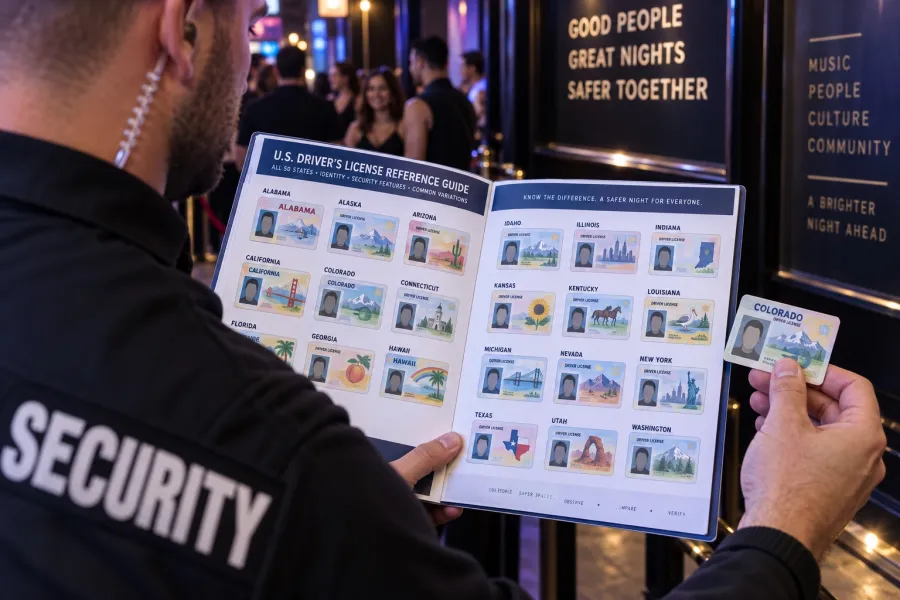
Venue verification protocols rely on secondary physical tests and standardized 50-state reference manuals that neutralize any theoretical advantage gained from fake id state selection.
Experienced community contributors repeatedly highlight that focusing solely on geographical origin overlooks how modern venue screening actually operates. Frontline door staff rely heavily on multi-tiered assessment procedures that neutralize geographic advantages.
When staff encounter an out-of-state credential that appears questionable, standard hospitality protocol involves verbal cross-examination. Bouncers routinely ask the patron to state their street address, confirm their zodiac sign, or name their high school mascot without hesitating. If a patron memorized only a birthdate while ignoring geographic context, the card is quickly confiscated.
Furthermore, venues increasingly maintain laminated ID checking guides published by the Drivers License Guide Company, which display full-color reference images of valid credentials from all 50 states. These guides detail the precise security specifications established by the American Association of Motor Vehicle Administrators (AAMVA), allowing staff to verify microprint placement and UV features regardless of origin.
From a legal perspective, contributors to legal advice communities frequently remind discussants that state origin does not mitigate statutory penalties. Under state statutes like California Penal Code § 470b and Texas Penal Code § 37.10, possessing an altered or fraudulent credential carries severe misdemeanor or forgery classifications regardless of which state name appears on the card. Understanding the legal risks of possessing fraudulent identification demonstrates that state selection provides zero insulation from statutory consequences, particularly when ordering from unregulated fake ID websites.
The ongoing community debate surrounding an in-state fake id versus an out-of-state fake id demonstrates how consumers attempt to calculate operational odds in nightlife environments. While forum participants continue to debate the theoretical merits of local conformity against distant obscurity, real-world venue practices confirm that fake id state selection cannot bypass modern electronic scanning, standardized reference guides, and multi-layered physical screening.
Frequently Asked Questions
Is an in-state fake ID or out-of-state fake ID better for passing door security?
Neither option offers a reliable advantage because door staff cross-examine an in-state fake id against genuine tactile standards and subject an out-of-state fake id to heightened manual scrutiny and reference manual comparisons.
Why do bouncers in college towns scrutinize an out-of-state fake ID so heavily?
Bouncers in college towns scrutinize an out-of-state fake id heavily because nightlife security data shows that underage patrons disproportionately order out-of-state credentials to exploit perceived staff unfamiliarity.
Does fake ID state selection change the criminal charges if an individual is caught?
No, fake id state selection has zero legal impact on criminal charges, as state statutes penalize the possession or presentation of fraudulent government credentials identically regardless of the issuing state.
How do hospitality venues verify unfamiliar out-of-state driver's licenses?
Hospitality venues verify unfamiliar out-of-state licenses by referencing comprehensive 50-state ID checking guides, scanning 2D barcodes, and asking rapid verbal questions about local geographic details.